
What are the important uses of aerogel pad roll coating machines?
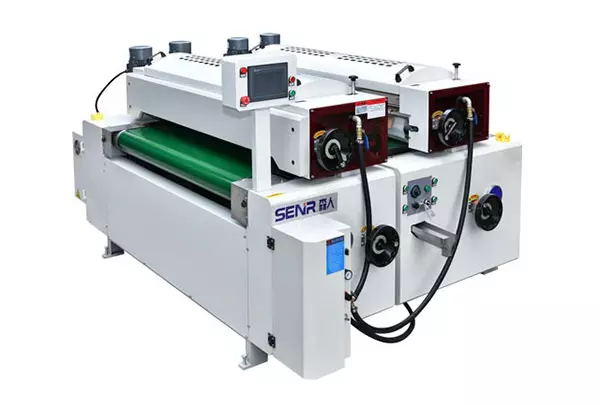
The aerogel pad roll coating machine is specially developed for new energy power battery aerogel thermal insulation pads and aerogel glass fiber felts. It employs a roller coating process to apply water-based adhesive, flame‑retardant coating, and sealing primer onto the surface of aerogel sheets. It can be paired with synchronous hot‑press lamination and drying of aluminum foil / PET film, solving the problems of powder shedding, low strength, difficulty in direct bonding, and edge sealing of aerogel materials.
The aerogel pad roll coating machine is a core piece of specialised equipment for the continuous deep‑processing of aerogel thermal insulation rolls in the new energy industry. It is mainly designed for roller coating, drying, and film‑laminating integration of silica aerogel glass fiber felts and pre‑oxidised fiber aerogel pads. It is an essential production tool for mass‑producing thermal insulation pads for power batteries.
1. Material modification uses
-
Surface coating of protective layers to solve severe powder shedding
The original aerogel felt has loose internal nano‑powders, which generate a large amount of dust during cutting and assembly, contaminating battery cells and circuit boards. By roll‑coating a water‑based flame‑retardant protective layer, the surface powder is firmly locked in, meeting the dust‑free production requirements of new energy factories.
-
Single‑side / double‑side roll coating of adhesive to produce self‑adhesive aerogel insulation pads
Pressure‑sensitive adhesives or water‑based structural adhesives are uniformly applied onto the aerogel surface, which are then dried to provide immediate bonding capability. Subsequent die‑cutting yields cell insulation sheets, eliminating the need for manual gluing during assembly and significantly improving PACK line efficiency.
-
Roll coating of hydrophobic and flame‑retardant functional coatings to enhance environmental adaptability
-
Hydrophobic coatings and high‑temperature‑resistant flame‑retardant coatings can be applied to give the aerogel pads water‑ and moisture‑proof properties and improved fire resistance, making them suitable for energy storage power stations and high‑temperature electrical control compartments in humid conditions.
2. Integrated lamination production uses
-
Coating + simultaneous hot‑press lamination with aluminium foil / PET film
-
After roll‑coating the adhesive, aluminium foil or flame‑retardant PET film is directly laminated in one step to produce aluminium‑foil‑composite aerogel rolls. The aluminium foil serves to block thermal radiation, prevent puncture, and provide encapsulation, and it is the primary thermal insulation material used in new energy vehicle battery packs.
-
Multi‑layer aerogel bonding and lamination
-
By precisely roll‑coating the adhesive layer, multiple thin aerogel felts can be bonded together to produce composite thermal insulation rolls of varying thicknesses as required.
3. Process quality control uses
-
Precise control of coating thickness to protect aerogel insulation performance
Using metering‑roll coating, the wet film thickness is digitally adjustable from 20 to 200 μm. It prevents excessive penetration of adhesive into the aerogel micropores, thereby avoiding an increase in thermal conductivity and ensuring ultra‑low insulation performance.
-
Low‑tension smooth conveying to prevent stretching and thinning
-
Aerogel is soft and prone to stretching and deformation. The equipment is equipped with a low‑tension control system so that the substrate maintains uniform thickness after processing, avoiding local insulation failure.
-
Continuous uniform coating with no leakage, streaks, or unevenness
-
Compared with spraying, this process eliminates overspray waste and achieves high adhesive utilisation. The finished rolls have consistent coating uniformity, making them suitable for large‑scale standardised production and reducing customer rejects.
4. Downstream industry finished‑product uses
-
New energy vehicle power batteries
-
Production of aerogel thermal insulation and buffer pads between battery cells, preventing thermal runaway propagation – a key auxiliary material for EV battery safety.
-
Energy storage batteries and photovoltaic storage cabinets
-
Processing of flame‑retardant thermal insulation aerogel rolls for energy storage modules.
-
Industrial high‑temperature insulation
-
Surface sealing and dust‑proof modification of aerogel insulation felts for pipes, boilers, and industrial equipment.
-
Rail transit, ships, and charging piles
-
Continuous coating processing of high‑temperature‑resistant fire‑proof aerogel gaskets.
5. Industrialisation value uses
-
Continuous automated roll‑to‑roll production – integrating unwinding → roll coating → gradient drying → film lamination → rewinding / online cutting, replacing manual and intermittent processing and greatly increasing output.
-
Flexible process switching – rapid changeover between single‑side and double‑side coating; easy exchange of adhesive formulations to accommodate different processes (back‑gluing, dust‑proof coating, flame‑retardant coating, etc.).
-
Integration with downstream die‑cutting equipment – the finished rolls are directly supplied to the die‑cutting process, forming a complete automated production line for aerogel thermal insulation pads.