Overview
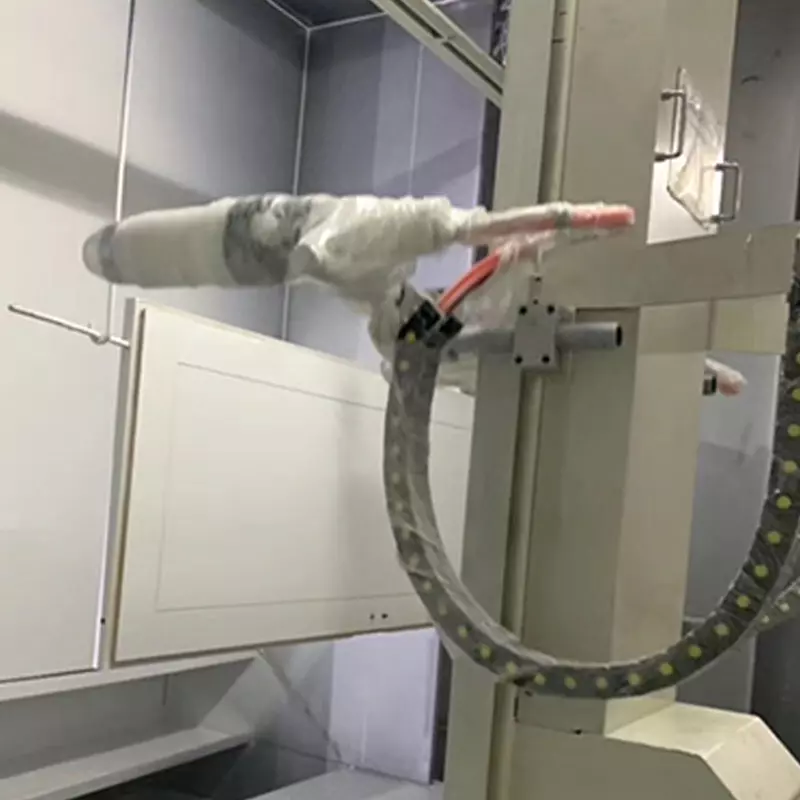
The Side-Mounted Electrostatic Rotary Bell Reciprocating Spray Coating Line is an advanced, fully automated spraying system that integrates high-speed electrostatic rotary bell atomization technology with precision reciprocating motion. Designed for side-spray applications, this system delivers superior coating quality, exceptional transfer efficiency, and significant material savings, making it the preferred choice for manufacturers seeking to upgrade from conventional spray methods.
The electrostatic rotary bell, also known as a rotary atomizer or paint bell, is an automatic electrostatic paint applicator widely used in high-volume production environments-. It can be mounted on a reciprocating arm, fixed position, or industrial robot-. In this system, the rotary bell is side-mounted on a vertically reciprocating mechanism, enabling thorough and uniform coating of flat or shaped workpieces.
Working Principle
The side-mounted electrostatic rotary bell is fixed onto the reciprocating mechanism, with the bell cup installed on the motor shaft. When compressed air is supplied, it drives the motor to rotate the bell cup at ultra-high speed. Simultaneously, a negative high-voltage electrostatic charge is applied to the bell. Coating material is delivered by a precision gear pump to the rear end of the bell cup, where it flows to the cup edge and is atomized into fine droplets under high-speed centrifugal force.
The atomized paint particles carry a negative electrostatic charge, while the workpiece is grounded (positive). This electrostatic attraction causes the charged paint particles to be rapidly and uniformly drawn toward the workpiece surface, minimizing overspray and maximizing transfer efficiency.
The rotational speed of the bell cup is precisely controlled by adjusting the compressed air input, while the spray pattern width is accurately regulated by shaping air. The entire process is managed by a PLC-based control system, enabling precise servo axis positioning, contour following for complex workpiece surfaces, and real-time monitoring of spraying parameters through a window-based operating system.
Applications
The Side-Mounted Electrostatic Rotary Bell Reciprocating Spray Coating Line is widely utilized across various industries, particularly where high-quality finishing and efficient paint usage are critical:
The system is compatible with both solvent-based and water-based coatings, offering excellent versatility for diverse finishing requirements.
Key Features & Benefits
Typical System Configuration
A complete Side-Mounted Electrostatic Rotary Bell Reciprocating Spray Coating Line typically comprises the following components:
-
Loading/Unloading Area – Manual or automatic feeding and collection of workpieces
-
Pre-Treatment Section – Dust removal system and optional pre-heating unit
-
Spray Booth – Enclosed spraying chamber housing the side-mounted reciprocating bell system, equipped with:
-
Reciprocating mechanism (servo motor + precision guide rails)
-
Electrostatic rotary bell atomizer(s) with bell cup (Φ30mm, Φ50mm, Φ60mm optional)
-
Precision gear pump paint supply system
-
Clean fresh air supply and exhaust ventilation
-
Shaping air control system
-
Flash-Off Tunnel – IR leveling section for coating flow-out
-
Curing System – IR drying oven or UV curing system
-
Cooling Section – Forced cooling for finished workpieces
-
Control System – PLC with HMI touchscreen for centralized monitoring and control
Technical Specifications (Reference)
Summary
The Side-Mounted Electrostatic Rotary Bell Reciprocating Spray Coating Line represents the pinnacle of automated spraying technology, combining high-speed rotary atomization with electrostatic charging and precision reciprocating motion. This system delivers exceptional coating quality, significantly reduces paint consumption (saving 30–50% compared to conventional methods), and dramatically improves production efficiency.
With its robust construction, flexible configurability, and seamless integration capabilities, this coating line is the ideal solution for manufacturers in automotive, furniture, appliance, electronics, and industrial equipment sectors seeking to achieve superior surface finishes while minimizing material waste, reducing operational costs, and meeting increasingly stringent environmental regulations.