
Common High‑Frequency Defects & Solutions for Aerogel Pad Roller Coating Machines
Equipment Overview
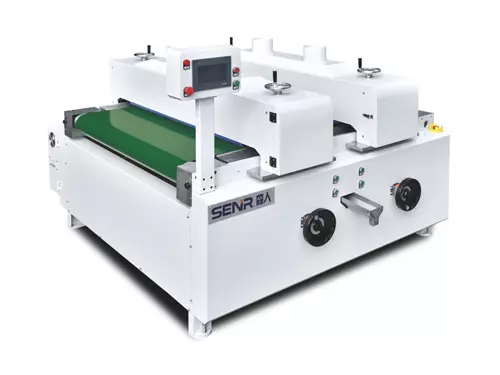
The aerogel pad roller coating machine is a roll‑to‑roll continuous coating system designed for single‑ or double‑side application of silica sol, seal coating, and hot‑melt adhesive onto fiberglass aerogel felt and silica aerogel insulation pads. It integrates tension control, PTC drying ovens, metering rollers, and glue tank recovery, providing fully automated operation to solve problems such as powder shedding, floating glue, and uneven coating thickness. It is widely used in new energy pipeline insulation, lithium‑battery thermal barriers, and industrial fire‑resistant aerogel coil production lines.
Process Flow
The fiberglass aerogel felt substrate is fed from the unwinding unit, tension‑leveled, and then enters the coating roller group at a constant speed. The gravure roller picks up a metered amount of silica sol from the glue tank and transfers it onto the aerogel surface. The press roller compresses and forces the sol to penetrate the felt, with excess sol being recovered and recycled. After coating, the web passes through a multi‑zone PTC oven for drying and gel curing, then cools down and is rewound under constant tension—completing coating, penetration, drying, and rewinding in one continuous process.
(1) Coating Process Defects
| Defect | Possible Causes | Solutions |
|---|---|---|
| Uneven coating thickness (one side thicker) | Coating roller not parallel; gap difference between two ends; uneven tension left/right. | Calibrate roller parallelism with a dial gauge; correct web guiding; balance tension on both ends. |
| Surface floating glue / powder shedding | Insufficient pressure from the squeeze roller; too high solids content of silica sol; substrate not plasma‑activated. | Increase press‑roller pressure to recover excess glue; dilute the sol; activate plasma pretreatment. |
| Bubbles / pinholes in coating | Air bubbles in the sol; oven temperature rises too fast; substrate contains moisture. | Let the sol stand to de‑air; lower the first‑zone drying temperature; pre‑dry the substrate. |
| Rewinding adhesion / layers sticking together | Incomplete drying; cooling zone malfunction; insufficient oven airflow. | Extend drying time; clean the PTC heater air ducts; increase exhaust air volume. |
| Aerogel felt stretching, thinning, or breaking | Excessively high tension; speed mismatch between zones; spreader roller failure. | Reduce tension parameters; re‑calibrate servo synchronization; replace with a curved spreader roller. |
(2) Mechanical Equipment Failures
| Defect | Possible Causes | Solutions |
|---|---|---|
| Roller vibration / abnormal noise during operation | Bearing wear or lack of grease; excessive gear backlash; dried glue deposits on roller. | Apply high‑temperature grease; adjust gear meshing; stop and clean roller surface with solvent. |
| Glue tank pipeline blockage / interrupted glue supply | Silica sol sedimentation; filter element not replaced regularly. | Clean the glue tank every shift; replace filter elements; keep the stirring pump running continuously. |
| Oven slow heating / local temperature not reaching set value (PTC heater failure) | Dust accumulation on PTC elements blocking heat dissipation; individual heater open circuit; blocked air ducts. | Brush dust off fin surfaces; check and replace faulty PTC heaters; clear the circulation air duct. |
| Large tension fluctuations / frequent web wandering | Tension sensor zero drift; dancer roller spring fatigue or breakage; dirty photoelectric edge‑guide sensor. | Re‑calibrate the tension controller; replace the return spring; clean the photoelectric sensor lens. |
| Telescoping rewind / uneven end faces | Incorrect taper tension parameters; guide mechanism sticking. | Adjust rewind taper coefficient; clean the guide rails and lubricate. |
(3) Electrical & Automation Failures
| Defect | Possible Causes | Solutions |
|---|---|---|
| Speed mismatch between zones / severe start‑stop shock | PID parameters of servo drives out of tune; encoder loose. | Tune servo PID settings; check and tighten encoder connection. |
| Temperature alarm / over‑temperature | PTC temperature sensor shifted; blower fan stopped. | Reposition the sensor; check and restart blower motor. |
| Pump / solenoid valve not responding | Glue debris blocking the valve spool; loose wiring connection. | Clean the valve; check and tighten electrical connections. |
Previous: No More